
How To Choose the Right White Label Casino Solution In 2026



AI-assisted. Reviewed by KodeDice Editors.
Introduction
White-label casinos play a crucial role in the iGaming industry. Where the global gambling industry forecasts to exceed $655 billion by the end of 2026, white label solutions provide a simple way for casino operators to enter a market efficiently. This model removes the struggle of building your own online casino software while managing all the difficult parts of licensing and legal compliance. By using proven technology from leading providers, casino brands can launch much faster and spend their time winning over new players instead of fixing bugs.
As global regulations get more local and complex, choosing a white label casino solution provider’s ecosystem has significant and long-term stakes. You have to know how these platforms are balancing operational ease with the flexibility we need to scale in the competitive online gaming market.
This guide will discuss the white-label model's underlying architecture and what distinguishes a strong-performing partner from one that hinders business growth.
What is a White Label Casino Solution?
A white-label casino is a pre-managed gambling platform delivered by a third-party company that already holds a valid gaming license. This setup gives a business owner the infrastructure needed to launch a brand and domain without building any software from scratch. That basically means the brand is functioning under the provider’s legal umbrella and can also benefit by using their existing payment wallets, payment systems, and lists of games from leading gaming providers.
By removing the technical and legal burden, this model allows the operator to focus entirely on marketing, customer acquisition, and growing their player base. Based on industry standards, a standard package includes these essential pillars:
| Component | Functionality | Why It Matters |
|---|---|---|
| Pre-Built Platform | A ready-to-use software core (PAM) that handles player registration and wallets. | Eliminates years of expensive and risky software development, providing a cutting-edge technology foundation. |
| B2C Licensing | Legal coverage under the provider’s sub-license (e.g., Curaçao or Malta Gaming Authority). | Allows for immediate market entry without personal legal applications, ensuring regulatory compliance. |
| Unified Game API | A single connection to thousands of slots, live dealer games, and table games from multiple providers. | Saves the hassle of negotiating individual deals with every game studio, including best gaming providers. |
| Payment Ecosystem | Integrated payment gateways for fiat and crypto deposits and withdrawals with secure payment system. | Provides stable banking rails and merchant accounts from day one, supporting popular payment methods and payment processing options. |
| Regulatory Tools | Built-in features for ID verification (KYC), Anti-Money Laundering (AML), and deposit limits. | Help the brand to stay compliant with global laws automatically and manage risk effectively. |
| Managed Support | 24/7 ongoing technical support, maintenance, and first-line player assistance. | Keeps everything running properly without the need for an in-house IT team, providing managed services for sustainable growth. |
Who Often Chooses A White Label Solution?
- Local Brands: Casino operators wanting to test a specific region or new market without a massive upfront investment.
- Agile Teams: Businesses that value getting to market fast over owning the platform's actual source code.
- Affiliate Groups: Marketing experts moving from lead generation to platform ownership.
This setup is the primary choice for bypassing the legal work of direct licensing, which often takes years to secure.
What Does a White Label Setup Include?
When duties are divided properly the partnership works well. The platform provider manages the technical and legal "heavy lifting," while the operator handles the public-facing brand.
The provider typically covers:
This means the water comes with legal cover, meaning a valid B2C license (e.g., Curaçao or Malta Gaming Authority) to comply instantly.
- The Engine: Platform hosting, server maintenance, and periodic technical updates
- Game Library: Thousands of titles from leading developers and top gaming providers, integrated instantly
- Finance & Safety: Merchant accounts, payment gateways, fraud monitoring tools, and secure payment system.
The operator is responsible for:
- Identity: Brand strategy, domain name, and web design.
- Growth: Marketing campaigns and player acquisition.
- Retention: Retention strategies and loyalty mechanics to retain players.
Key Features of a White Label Casino Platform
A white label online casino platform is a high-performance engine that combines several critical tools into one dashboard. These essential features keep the site running, secure, and profitable.
Sportsbook Management and Betting Platform
Modern white label casino solutions now include a full sportsbook platform. This feature handles thousands of live events daily with real-time data feeds. It lets casino operators and sportsbook operators manage odds and set betting limits for different regions from one place. This turns a simple casino into a complete gambling site, addressing market demands.
Casino Game Selection and Quality
Good games keep players coming back. A strong platform offers a massive library of video slots, live dealer games, and "crash" games powered by a casino game aggregator. All content comes from certified studios to ensure game fairness. Every game must work perfectly on mobile devices since that is where most players bet.
Payment Management and Security
And the business depends on stable payment solutions. Make sure the platform accepts credit cards, e-wallets, and crypto casinos such as Bitcoin or USDT while addressing the top payment integration challenges that can disrupt user experience. Security tools operate in the background to prevent fraud and data breaches. This protects both the site's revenue and the players' personal info.
Scalability and Flexibility
The software must handle big traffic spikes without slowing down. Scalability means the site remains fast for huge events like the World Cup. Flexibility enables the brand to update the appearance or transition later to custom online casino software as market trends evolve.
Technical Support and Maintenance
The software provider handles all the backend technical work. This includes server hosting, software updates, and security patches. 24/7 ongoing technical support is a requirement to fix bugs before they hurt the user experience. This lets the owner focus on business growth rather than fixing code.
Licensing and Regulatory Compliance Support
To immediately meet the legal side of business, the platform provider offers a sub-license. This includes oversight of all compliance audits and platform certifications mandated by regulators such as the UK Gambling Commission and Malta Gaming Authority. It removes the stress of dealing with complex gaming laws in different countries.
Player Management and Admin Dashboard
A central dashboard gives the owner full control over player accounts and bonuses. The system tracks every bet and deposit to help make better business decisions. This tool simplifies daily operations by putting all reporting and risk management in one place.
Security, Fair Play, and Anti-Fraud Features
Advanced encryption and secure wallet systems protect every transaction on the platform. Built-in anti-fraud tools work to detect and stop bonus abuse or suspicious activity. Every game uses certified RNG technology to prove the results are fair to the players.
Custom Branding and UI/UX Flexibility
The software lets you build a unique identity with your own logos and color palettes. With tools like a casino frontend builder, you can move things around and localize content for specific markets, so the site doesn't just look like a clone. It gives you a custom feel while still running on a battle-tested, pre built casino platform.
Pros and Cons Of White Label Casino Solutions
| Pros | Cons |
|---|---|
| Fast launch: Platforms can easily go live within a week. | Limited control: Instead of major feature edits the changes are restricted to minor branding. |
| Low initial cost: The provider handles the expensive software development part. | Provider dependency: Updates and game selections depend entirely on the provider’s timeline. |
| Licensing included: The setup is fully managed with regulatory compliance handled. | Revenue share model: A large portion of profit around 6–8%, goes to the provider. |
| Ongoing support: Security, hosting, and maintenance are managed externally. | No software ownership: The operator is essentially renting the platform rather than owning the code. |
| Marketing focus: Lower technical workload allows more time for branding and growth. | Customization limits: It is difficult to add unique features that aren't already in the system. |
Selecting The White Label Casino Software Key Considerations
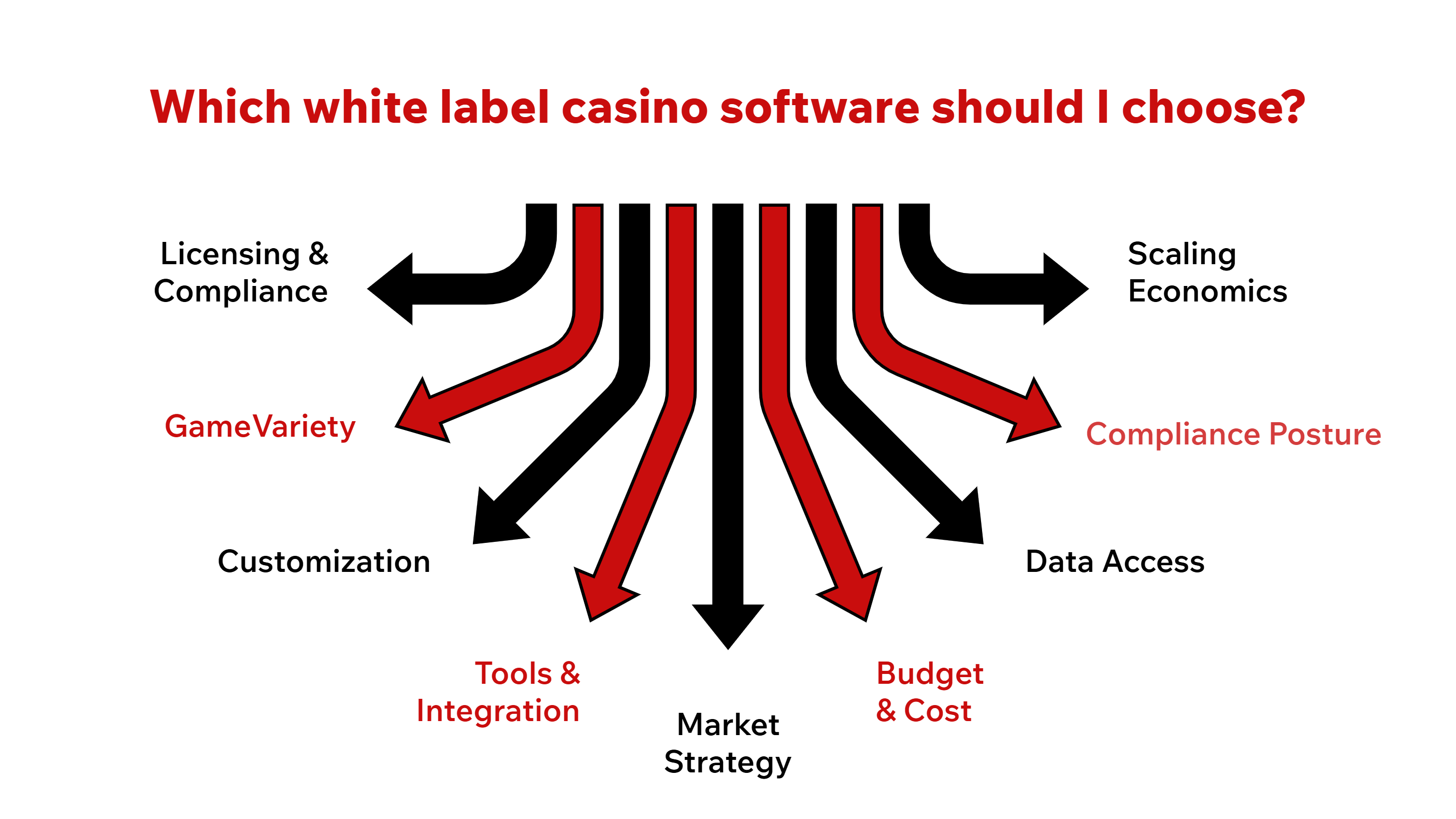
Licensing & Compliance
The legal safety features are one of the biggest advantages this setup offers. But, before moving forward its essential to check the B2C license, like Curaçao, and handle all the boring regulatory filings for you. The best partners include automated KYC and AML tools so you don't have to verify every player manually.
Game Variety
Your site needs a massive mix of games to keep people betting. Look for a platform that bundles classic slots, live dealers, and new "crash" games from big-name studios. A provider that adds new, trending titles every week is what keeps a brand from going stale.
Customization Options
The backend is shared, but the frontend has to be your own. You need the power to change layouts, colors, and the UI to stand out from every other site on the market. This flexibility is how you tailor the experience to a specific region or a niche audience.
Tools & Systems Integration
The platform has to play nice with other software. This means having payment gateways for both cash and crypto ready to go, plus CRM tools to track what your players are doing. Pre-configured systems mean less technical headache and a smoother launch.
Market Strategy
White labels casino software are the best choice if you need to go live fast and ride a market trend. It lets you test a new niche without wasting a year on custom coding. This model is for businesses that want to spend their time on marketing, not fixing servers.
Budget And Cost Of Capital
This is the cheapest way to break into iGaming. You save a fortune on upfront development and legal fees. While you pay a revenue share later, it keeps your cash free now so you can spend it on getting players through the door.
Data Access
Operating on a shared platform means the provider usually controls the primary database and server logs. Meanwhile, operators get access to required player data through the admin dashboard. It means they may have less control over raw data compared to a turnkey business model. It is important to confirm how much access is provided for third-party marketing tools.
Compliance Posture
The provider acts as the license holder and manages the legal heavy lifting. This setup protects the brand from the direct risks of running a gambling license. Operators just need to follow the provider's internal rules to keep the site active and compliant.
Scaling Economics
A revenue-share model can get expensive as the brand grows and brings in more money. While starting cheap is good for small sites, successful brands may find fixed-fee setups are better for long-term profit. Picking a provider that allows for a later move to a turnkey model can save significant cash during expansion.
White Label vs Other Casino Launch Models
| Launch Model | License | Cost | Control | Time to Launch |
|---|---|---|---|---|
| White Label | Provider license | Low | Low–Medium | Fastest (quick market entry) |
| Turnkey | Operator obtains license | Medium | Medium | Medium (fast market entry) |
| In-House | Operator | High–Very High | Full | Slow |
| Aggregator + Custom | Operator | Medium | High | Medium |
Why Choose White Label Casino?
Rapid Market Entry
White-label setups provide the fastest route to go live, often taking only a few weeks to launch. Everything from the software and game lists to the legal license is already set up and ready. This allows a brand to skip the massive delays of building code or waiting on regulators. It is the only way to quickly jump on a trend or seasonal sports event without missing the window.
Lower Upfront Investments
Building a casino from scratch is expensive due to development and legal fees. A white label solution avoids these costs with a pre-built platform and a much lower entry fee. This allows a business to spend its budget on marketing and player retention instead. It is a low-risk way to enter the market without a massive upfront investment.
Smooth Partnerships & Accessibility
This model works through a single point of contact for every operational need. The provider manages the game studio contracts, server hosting, and all technical upkeep through comprehensive managed services for iGaming operators. Such a setup removes the stress of juggling multiple vendors at once. It is also helpful for startups who don't have an internal IT department.
Global Payments Support
Platforms include built-in payment gateways for a wide range of currencies. Support covers everything from credit cards and e-wallets to crypto assets like BTC or USDT within broader online casino and iGaming platform solutions. These systems allow a brand to process deposits and withdrawals worldwide immediately after launch.
Benefits of Using White Label Casino Software
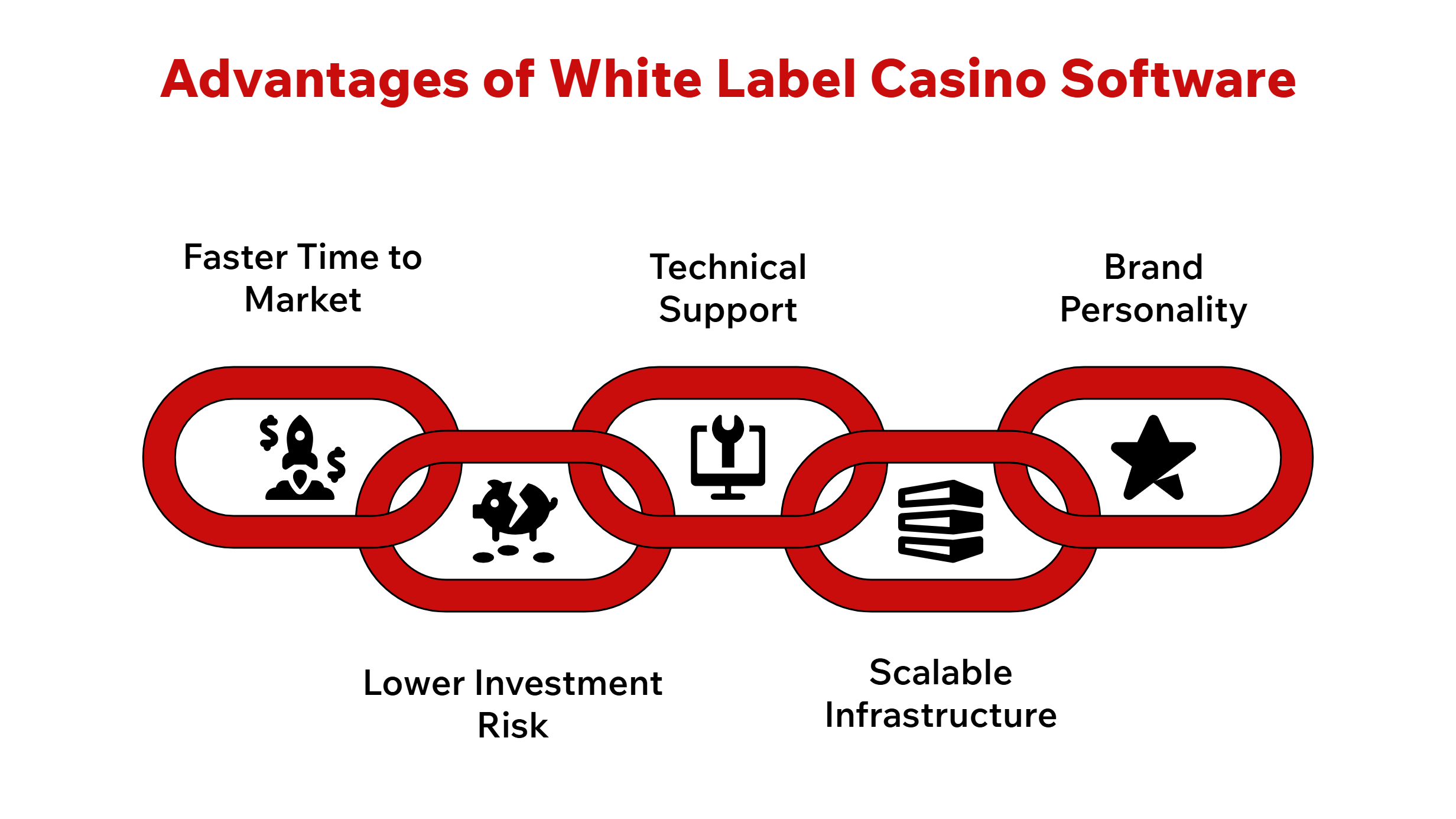
Using a white label removes the headache of managing complex code or legal filings. It shifts the entire focus away from building a platform and toward growing the player base, as outlined in our broader guide on choosing the right white label casino solution.
Faster Time to Market
The platform is delivered ready to go with game engines, payment tools, and a license already attached. This allows a brand to launch in weeks instead of the months or years needed for a custom build. It is the best route for hitting a specific market window or event.
Lower Investment Risk
Building from zero costs a fortune in development and legal fees. A white label lowers this barrier by offering a proven system for a smaller setup fee. This lets owners test their ideas without risking massive amounts of capital upfront.
Technical Support and Maintenance Included
The provider takes over the hosting, site updates, and all security patches. Owners avoid the cost of a big IT team since the backend is managed by the vendor. This keeps the site online and ensures bugs are fixed before they impact revenue.
Scalable and Future-Ready Infrastructure
A white label eliminates the need for a dedicated IT team to handle the backend infrastructure. The provider manages hosting, software updates, and security patches. As a result, the platform maintains high uptime without hampering the revenue.
Boost Your Brand’s Personality and Nurture Loyalty In Your Customers
The usage of this engine allows operators to have complete freedom over their frontend, which can help them build a unique brand identity independent of the underlying engine. This creates a flexible ecosystem for developing unique VIP rewards and loyalty programmes that resonate with niche of consumers. These individualized touches avoid a template look, and help convert one-time players into habitual users.
Cost & Time to Launch
Startup costs and launch speeds vary heavily depending on the chosen business model. Below is the breakdown of white-label costs and timelines, but you should also compare turnkey vs white label vs custom solutions when planning long-term growth.
- Setup Fees and Revenue Model: Initial costs are low, which makes it a preferred choice for new operators. Most providers then charge a monthly revenue share, typically between 6% and 8% of the site's earnings, similar to how many turnkey online casino solutions structure their fees.
- Typical Market Costs: A white-label setup usually costs in the low five-figure range for the software and licensing. This is a fraction of the six-figure investment needed to build a custom platform from scratch.
- Time to Launch: Brands can go live within 4 to 6 weeks because the technical infrastructure and games are ready to use. This timeline avoids the months of delays common with applying for independent gambling licenses.
- Cost and Time Comparison to other Models: White labels launch in weeks, while turnkey solutions take months due to separate licensing needs. Big budgets and over a year of development make custom platforms the slowest option.
Mistakes to Avoid In A White Label Casino Solution
Overlooking Quality Of Integrations
One of the major mistakes casino operators make is neglecting or compromising the quality of integrations such as regulatory tools, games providers, managed services, payment systems, etc. Choosing the white label casino provider for your requirements should be validated on the parameters of tested connections, authorized networks and partnerships, seamless services, and authentic integrations that aid smooth operations and player satisfaction.
Choosing the Cheapest Provider Instead of the Best
While choosing the white label casino developer on the basis of cost-effectiveness may seem like a cost-saving measure at the beginning, it may lead to compromised quality, poor support, and limited features. Investing in a premier white label casino development support with the same level of innovation you would expect from a modern sportsbook casino platform feature set, investing in cutting-edge tech and compliance, and ongoing improvements that prioritize value and reliability helps build business sustainably.
Targeting Markets Without Understanding Regulations
White-label casino development approach often puts operators in jurisdictional challenges. Entering new markets without thorough knowledge of local gambling regulations can lead to legal troubles, fines, or forced shutdowns. Each jurisdiction has unique licensing requirements, compliance standards, and player protection laws. Operators must conduct detailed research or consult experts to ensure their white-label casino solution aligns with the legal frameworks of target regions, protecting the business and fostering trust with players.
Underestimating Marketing Costs
Launching a white label casino is only the first step; attracting and retaining players requires significant marketing investment. Underestimating these costs can stall growth and reduce revenue potential. Edging the competition in iGaming casino segment, effective marketing campaigns, social media management, promotions, SEO, affiliate partnerships, etc., takes center stage. This realistically maximizes reach but also budget, therefore needing clear consideration right from the first stage of planning.
Ignoring Responsible Gaming Obligations
Responsible gaming is not just a regulatory requirement but a critical component of player trust and brand reputation. Ignoring these obligations can hamper business reputation, fairness, and authenticity, and impose legal penalties. Hence, implementing self-exclusion options, deposit limits, and other safety protocols is vital for compliant operations.
Relying Too Heavily on Bonuses
While bonuses can attract players, over-reliance on them without a balanced strategy may harm profitability and player retention. Excessive bonus offers can lead to bonus abuse and attract players seeking only free rewards. A sustainable approach combines attractive promotions with engaging gameplay, loyalty programs, and personalized experiences. Focus on creating real value for players to build long-term engagement and maximize revenue.
Poor UI/UX Choices
Poor UX design impacts navigation, game discovery, and transaction flow, reducing player satisfaction and retention. Investing in a user-friendly interface that renders mobile responsible, has fast loading times, and has intuitive menus is essential. A polished UI/UX enhances the overall experience, encourages longer play sessions, and differentiates your brand in a competitive market.
Not Planning Long-Term Growth Beyond WL
Treating a white label solution as a short-term fix without planning for scalability or eventual independence limits growth potential. Developing a clear business plan, setting milestones for scaling, seeking customizations, and possibly transitioning to a fully independent or a turnkey platform catalyzes successful operations. This aids in planning ahead to fit into the adapting market changes, expanding into new regions, and beyond.
Success Requires Strategy, Not Just Software
Owning a white label casino solution is only part of the equation. Success depends on a comprehensive business strategy encompassing regulatory adherences, deep market research, prompt player acquisition, and brand positioning strategies. A not-so-well-rounded strategy may cause failure in achieving monetization goals of your casino business.
Picking The Right White Label Casino Provider
Before making a choice, compare 3–5 different vendors based on these specific factors:
- License Authority and Quality — Ensures the provider holds valid and reputable gaming licenses covering your target markets.
- Geographic Market Coverage — Confirms the regions where the platform is authorized to operate and accept players.
- Studio Partnerships and Game Selection — Indicates access to a wide range of games from trusted and popular developers.
- Fiat and Cryptocurrency Payment Options — Offers diverse and secure payment methods to accommodate different player preferences.
- Backend Depth and Dashboard Ease of Use — Reflects the robustness and user-friendliness of the administrative control panel.
- CRM, Segmentation, and Bonus Engines — Provides tools to manage customer relationships, target player groups, and create promotions.
- SLA Uptime Guarantees and Support Response — Guarantees platform availability and timely technical assistance.
- Platform Migration Flexibility — Allows future upgrades or transitions to custom or turnkey solutions if needed.
- Integrated Marketing and SEO Tools — Supports promotional efforts and improves the platform’s online visibility.
Questions to Ask Your White Label Provider Before Signing & Finalizing
Ask these questions before you spend a dime.
- Which licensing jurisdictions do you provide?
- Which specific target markets does your license cover?
- Is it possible to migrate or upgrade to a custom solution later?
- How much control do I have over branding and marketing customization?
- Which game studios are included, and can I add more?
- Which payment methods and currencies are supported?
- What security protocols protect player data and transactions?
- What is the exact revenue share or fee structure?
- Does it come with a bonus engine to help keep players around?
- Are competitive odds included in the sportsbook offering?
- Can I manage risk by setting specific betting limits in the back office?
In 2026, most white label setups take about 4 to 12 weeks to go live. Before signing anything, get a firm launch date from provider to make sure it fits your schedule.
A quality provider should be transparent and aligned with your goals, just as KodeDice handles these requirements by checking our services through these same questions.
How to Start Your White Label Casino Platform Online?
Launching a white label casino platform is definitely simpler than building from scratch, but it still needs a smart plan. Success requires a solid marketing strategy—including SEO and affiliates—to promote the platform. Here is the clear breakdown of steps to develop and launch your website, including market research and thorough testing for a smooth user experience.
Step 1. Define Your Business Vision
Start your entry into the market by identifying:
- Target markets and regions: the Americas, Europe, Asia, or Africa.
- What players want: Choose between live tables, slots, or crypto-specific games.
- Marketing plan: Will you rely on SEO, influencers, or affiliate networks?
- Features that stick: Use a mix of betting options and jackpots to hold player interest.
- Post-launch checks: Plan to track user feedback to make relevant changes.
Step 2. Choose A White Label Provider
Shortlisting a partner is the most important part of the plan. Here are some areas to check:
- Track Record: Take your time to analyse the portfolio in the iGaming industry.
- Service Scope: Check available licenses and built-in payment gateway options.
- Flexibility: Confirm the ability to tweak things and handle the traffic on the platform.
- Game Variety: Ensure solid game options are available with major studios.
Step 3: Customization and Personalization
Speed matters, but branding prevents a site from looking like a clone. Pay attention to:
- Visual Design: Establish logos, color palettes, and site layouts.
- Local Presence: Set up a unique domain and offer local languages and currencies.
- Mobile Use: Ensure the platform works perfectly on phones, not just desktops.
- Specific Tweaks: Tailor features to match exact business goals.
Step 4: Regulatory and Legal Setup
Next, handle the paperwork and legal requirements:
- The Permit: Secure the right license—such as MGA or UKGC—through the provider.
- Compliance: Set up KYC, AML, and privacy rules to remain legal.
- Financial setups: Financial checks, evaluation, payment gateways, etc.
Step 5: Operational Checks
Run through these tasks with the provider before the site goes live:
- Integration Test: Verify that payments, the back office, and PAM are communicating.
- Player Retention: Confirm the bonus engine and localized settings are ready to use.
- Early Promotions: Provide free bets or sign-up options to attract new users.
- Safety: Ensure age and identity verification tools are fully active.
Step 6: Testing and Launch
The final phase involves the proper testing:
- Quality Assurance: Do a final speed and security check to prevent common failures.
- Launch: Going live with a strong maintenance and audit process.
- Market the product: Using your planned campaigns and partnerships to grow.
How Frequently Does KodeDice Provide Maintenance and Platform Updates?
Maintenance at KodeDice is a continuous operation rather than a periodic task. Weekly security patches are deployed to stay ahead of risks and remain compliant with shifting gambling laws. Every month, performance boosts and new features go live to keep the site fast and competitive.
Infrastructure is backed by 24/7 technical monitoring to catch and resolve glitches before they affect player activity. In the event of a critical bug, emergency fixes are performed immediately. This level of ongoing support guarantees high uptime and also allows operators to focus on growth.
Blog Questions
Have a Specific
Question? Let's Talk.
Our solutions team responds within 4 business hours.
No sales pitch unless you ask for one.
The frontend is fully flexible to enable seamless changes to logos, colors, and layouts. Operators are provided with essential tools to build custom player segments and unique bonus rules that perfectly align with specific brand identities.
The platform utilizes high-level SSL encryption, mandatory 2FA, and AI-driven fraud monitoring. Built-in KYC and AML tools are also active to verify users and secure all financial transfers against modern cyber threats and unauthorized access.
Yes, the entire user interface can be tailored to match your brand requirements. While the core engine remains standard, you choose the specific game mix, the visual design, and exactly how player promotions or loyalty rewards work on the site.
The system accepts credit cards, popular e-wallets, and major cryptocurrencies like BTC or USDT. It supports many international fiat currencies and converts them automatically at checkout to provide a localized experience for players in any region.
You receive 24/7 technical monitoring and routine software updates to maintain peak performance. Expert teams handle server maintenance and implement critical security patches to ensure the site remains running with zero downtime for your users.